Metaflow Deep Dive (1) - Static Analysis

Introduction
Metaflow is an open-source Python framework developed by Netflix for building fast and scalable data science and ML workflows. It offers a concise set of intuitive yet powerful APIs, enabling users to focus on expressing their workflow topology.
If you are new to Metaflow, here are some excellent tutorials to get started.

Why I Wrote This
Lately I joined Netflix to work on Metaflow, about which I’m keen on learning everything. Since I do not have much exposure to aspects such as functional and meta programming in Python, it is a rewarding learning experience digesting the source code.
In this series of articles, I’ll be walking through major implementation details of Metaflow. These writings will serve as my notes as well as (hopefully) reference for you.
Entering the Playground
Environment Setup
- Python: 3.12
- Metaflow: 2.19.19
- OS: macOS Sequoia 15
With an editor/IDE that comes with handy code navigation and debugger support, you can easily follow along with my progress in this series.
A Sample Workflow
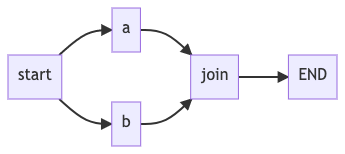
Let’s start with a simple workflow, namely branch_flow.py:
from metaflow import FlowSpec, step


class BranchFlow(FlowSpec):

    @step
    def start(self):
        self.next(self.a, self.b)

    @step
    def a(self):
        self.x = 1
        self.next(self.join)

    @step
    def b(self):
        self.x = 2
        self.next(self.join)

    @step
    def join(self, inputs):
        print('a is %s' % inputs.a.x)
        print('b is %s' % inputs.b.x)
        print('total is %d' % sum(input.x for input in inputs))
        self.next(self.end)

    @step
    def end(self):
        pass


if __name__ == '__main__':
    BranchFlow()
A couple of things to note here:
- User-defined workflow class (
BranchFlow) inherits fromFlowSpec. - Each step/stage of the workflow should be a method decorated with
@step. A valid workflow begins withstartand finishes atend. - The
self.nextfunction is invoked exactly once at the end of each step to specify the next step (transition) to execute. The entire workflow is logically built into a directed acyclic graph (DAG).
Types of a Step
A step belongs to one of the following types:
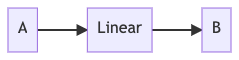
Linear
A linear step contains one parent step and one child step.
Fan-Out
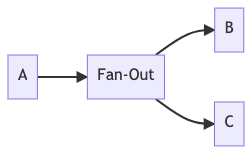
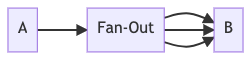
A fan-out step has one parent step but two or more child steps, or one child step to be executed multiple times.
- Static fan-out connects to multiple hard-coded child steps.
- Foreach/parallel fan-out has one child step that is executed multiple times, where the repetition is known at runtime.
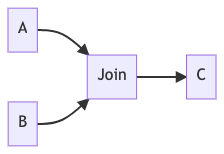
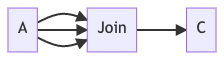
Join (Fan-In)
A join step has fan-out parent step(s) and one child step. The child step is executed once all the parent steps are
completed. It is the step to process the gathered results from parent fan-out steps.
- Join from static fan-out.
- Join from foreach/parallel fan-out.
The @step Decorator
Before we move on, let’s just inspect the @step decorator:
# metaflow/decorators.py

def step(f):
    """
    Marks a method in a FlowSpec as a Metaflow Step. Note that this
    decorator needs to be placed as close to the method as possible (ie:
    before other decorators).
    """
    f.is_step = True
    f.decorators = []
    f.config_decorators = []
    f.wrappers = []
    f.name = f.__name__
    return f
It marks a method as a step by adding an is_step attribute so that Metaflow can recognize it later. It also
initializes lists for decorators, config_decorators (for config-based decorators), and wrappers (for user-defined
step wrapper decorators) — both of which are newer additions to Metaflow’s decorator system.
Lifecycle of a Metaflow Run
By running the code of BranchFlow example with python3 branch_flow.py run, following output (or similar) can be
observed:
Metaflow 2.19.19 executing BranchFlow for user:lizhaoliu
Validating your flow...
    The graph looks good!
Running pylint...
    Pylint is happy!
2026-02-15 09:24:11.264 Workflow starting (run-id 1740798651260512):
2026-02-15 09:24:11.269 [1740798651260512/start/1 (pid 47309)] Task is starting.
2026-02-15 09:24:11.793 [1740798651260512/start/1 (pid 47309)] Task finished successfully.
2026-02-15 09:24:11.796 [1740798651260512/a/2 (pid 47312)] Task is starting.
2026-02-15 09:24:11.798 [1740798651260512/b/3 (pid 47313)] Task is starting.
2026-02-15 09:24:12.428 [1740798651260512/b/3 (pid 47313)] Task finished successfully.
2026-02-15 09:24:12.442 [1740798651260512/a/2 (pid 47312)] Task finished successfully.
2026-02-15 09:24:12.445 [1740798651260512/join/4 (pid 47318)] Task is starting.
2026-02-15 09:24:12.900 [1740798651260512/join/4 (pid 47318)] a is 1
2026-02-15 09:24:12.900 [1740798651260512/join/4 (pid 47318)] b is 2
2026-02-15 09:24:12.954 [1740798651260512/join/4 (pid 47318)] total is 3
2026-02-15 09:24:12.955 [1740798651260512/join/4 (pid 47318)] Task finished successfully.
2026-02-15 09:24:12.958 [1740798651260512/end/5 (pid 47321)] Task is starting.
2026-02-15 09:24:13.428 [1740798651260512/end/5 (pid 47321)] Task finished successfully.
2026-02-15 09:24:13.428 Done!
We can see that Metaflow did the following things sequentially:
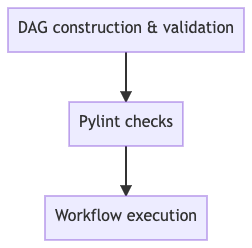
A more detailed workflow lifecyle diagram can be found here in Metaflow docs archive.

Entry Point
A user-defined workflow class is supposed to inherit from FlowSpec.
# metaflow/flowspec.py

class FlowSpec(metaclass=FlowSpecMeta):

    def __init__(self, use_cli=True):
        """
        Construct a FlowSpec

        Parameters
        ----------
        use_cli : bool, default True
            Set to True if the flow is invoked from __main__ or the command line
        """

        self.name = self.__class__.__name__

        self._datastore = None
        self._transition = None
        self._cached_input = {}

        if use_cli:
            with parameters.flow_context(self.__class__) as _:
                from . import cli
                cli.main(self)
A few things to note compared to earlier versions of Metaflow:
FlowSpecnow uses aFlowSpecMetametaclass, which handles graph construction (_graph) and step discovery (_steps) at class creation time rather than in__init__. This enables features like flow inheritance and config-based decorators.parameters.flow_contextsets up parameter context before the CLI is imported.cli.main(self)starts the workflow.
Now before diving into the execution part, let’s look into the FlowGraph class.
FlowGraph
FlowGraph is the class that represents a workflow DAG. It also provides with methods to statically inspect the graph.
# metaflow/graph.py

class FlowGraph(object):
    def __init__(self, flow):
        self.name = flow.__name__
        self.nodes = self._create_nodes(flow)
        self.doc = deindent_docstring(flow.__doc__)
        self.sorted_nodes = []
        self._traverse_graph()
        self._postprocess()
The constructor takes a workflow class as an argument, and it does the following things:
self._create_nodes(flow)creates graph nodes and edges based on steps defined in the workflow.self._traverse_graph()traverses the graph to gather additional information (parents, fan-out, etc.). It also populatessorted_nodeswith the topological order of step names.self._postprocess()does remaining postprocessing.
Node Creation
DAG nodes are created by _create_nodes function. It inspects the workflow class, discovers all methods marked as steps,
parses their source code individually using ast
module (Abstract Syntax Tree - AST), and returns a dictionary of
DAG nodes.
# metaflow/graph.py

class FlowGraph(object):
    def _create_nodes(self, flow):
        nodes = {}
        for element in dir(flow):
            func = getattr(flow, element)
            if callable(func) and hasattr(func, "is_step"):
                source_file = inspect.getsourcefile(func)
                source_lines, lineno = inspect.getsourcelines(func)
                source_code = deindent_docstring("".join(source_lines))
                function_ast = ast.parse(source_code).body[0]
                node = DAGNode(
                    function_ast,
                    func.decorators,
                    func.wrappers,
                    func.config_decorators,
                    func.__doc__,
                    source_file,
                    lineno,
                )
                nodes[element] = node
        return nodes
Unlike earlier versions of Metaflow, which parsed the entire module AST and used a StepVisitor to walk the class
definition, the current implementation iterates over the flow class attributes directly. For each callable with an
is_step attribute (set by the @step decorator), it:
- Uses
inspect.getsourcelinesto get the function’s source code and line number. - Parses only that function into an AST.
- Constructs a
DAGNodewith the function AST, its decorators, wrappers, config decorators, docstring, source file, and line number.
This per-function approach is cleaner and supports features like flow inheritance where steps may come from different source files.
(Optional) More on AST
If you are interested in knowing more about AST, you can read about it here, and here.
Building a DAGNode
As mentioned earlier, a DAGNode instance encapsulates the metadata of a step.
# metaflow/graph.py

# some fields are omitted in the constructor here.
class DAGNode(object):
    def __init__(self, func_ast, decos, wrappers, config_decorators, doc, source_file, lineno):
        self.name = func_ast.name
        self.source_file = source_file
        self.func_lineno = lineno + func_ast.lineno - 1
        self.decorators = decos
        self.wrappers = wrappers
        self.config_decorators = config_decorators
        self.doc = deindent_docstring(doc)
        self.parallel_step = any(getattr(deco, "IS_PARALLEL", False) for deco in decos)

        # these attributes are populated by _parse
        self.type = None  # Type of this step.
        self.out_funcs = []  # Outbound/child step(s) (called in self.next).
        self.num_args = 0  # Number of arguments, including `self`.
        self.switch_cases = {}  # For split-switch: maps case values to step names.
        self.condition = None  # For split-switch: the condition variable name.
        self.foreach_param = None
        self.num_parallel = 0
        self.parallel_foreach = False
        self._parse(func_ast, lineno)  # Parses the function AST and updates the metadata.

        # these attributes are populated by _traverse_graph
        self.in_funcs = set()  # Inbound/parent step(s).
        self.split_parents = []  # Parent steps that have started unclosed fan-out till current step.
        self.split_branches = []  # Branches originating from each split parent.
        self.matching_join = None  # The join (fan-in) step down the graph that matches current split (fan-out).
        # populated by _postprocess
        self.is_inside_foreach = False
Notable differences from earlier versions:
- The constructor now accepts
wrappers,config_decorators,source_file, andlineno— supporting the richer decorator system and per-function source tracking. parallel_stepchecks if any decorator hasIS_PARALLELattribute (for the@paralleldecorator).- New fields
switch_cases,condition,split_branchessupport thesplit-switchstep type (conditional routing). self._parse(func_ast, lineno)is invoked for determining the steptypeandout_funcs(child steps).
# metaflow/graph.py

class DAGNode(object):
    def _parse(self, func_ast, lineno):
        self.num_args = len(func_ast.args.args)
        tail = func_ast.body[-1]

        # end doesn't need a transition
        if self.name == "end":
            # TYPE: end
            self.type = "end"

        # ensure that the tail an expression (a call of `self.next` is expected)
        if not isinstance(tail, ast.Expr):
            return

        # determine the type of self.next transition
        try:
            if not self._expr_str(tail.value.func) == "self.next":
                return

            self.has_tail_next = True
            self.invalid_tail_next = True
            self.tail_next_lineno = lineno + tail.lineno - 1

            # Check if first argument is a dictionary (switch case)
            if (
                len(tail.value.args) == 1
                and isinstance(tail.value.args[0], ast.Dict)
                and any(k.arg == "condition" for k in tail.value.keywords)
            ):
                switch_cases = self._parse_switch_dict(tail.value.args[0])
                # ... extract condition name from keywords ...
                if switch_cases and condition_name:
                    # TYPE: split-switch
                    self.type = "split-switch"
                    self.condition = condition_name
                    self.switch_cases = switch_cases
                    self.out_funcs = list(switch_cases.values())
                    self.invalid_tail_next = False
                    return
            else:
                self.out_funcs = [e.attr for e in tail.value.args]

            # Keyword arguments in `self.next` call.
            keywords = dict(
                (k.arg, getattr(k.value, "s", None)) for k in tail.value.keywords
            )
            if len(keywords) == 1:
                if "foreach" in keywords:
                    # TYPE: foreach
                    self.type = "foreach"
                    if len(self.out_funcs) == 1:
                        self.foreach_param = keywords["foreach"]
                        self.invalid_tail_next = False
                elif "num_parallel" in keywords:
                    self.type = "foreach"
                    self.parallel_foreach = True
                    if len(self.out_funcs) == 1:
                        self.num_parallel = keywords["num_parallel"]
                        self.invalid_tail_next = False
            elif len(keywords) == 0:
                if len(self.out_funcs) > 1:
                    # TYPE: split
                    self.type = "split"
                    self.invalid_tail_next = False
                elif len(self.out_funcs) == 1:
                    if self.name == "start":
                        # TYPE: start
                        self.type = "start"
                    elif self.num_args > 1:
                        # TYPE: join
                        self.type = "join"
                    else:
                        # TYPE: linear
                        self.type = "linear"
                    self.invalid_tail_next = False
        except AttributeError:
            return
Key takeaways from _parse(..):
- The last statement in a
stepmust callself.next(except forendstep). - At most one keyword argument is allowed in a
self.nextcall. - A
stepis one of these types (internally):start: the entry point step namedstart.linear: single step inself.nextcall. This step must take no arguments except forself.join: single step inself.nextcall. Must have at least one argument as inputs.split: two or more steps inself.nextcall, all of which are executed. (Previously namedsplit-and.)split-switch: dictionary-based conditional routing, where the first argument toself.nextis a dictionary mapping case values to steps, with aconditionkeyword argument. This replaces the oldsplit-ortype and is more powerful — it supports arbitrary number of branches (not just two), and can even route back to the same step for recursive patterns.foreach(num_parallel): single step inself.nextcall. The number of executions is dictated by the data size fromforeach(num_parallel) keyword argument.
split,split-switchandforeachare fan-out, whereasjoinis fan-in.
Graph Traversal
Now that a DAG is successfully built, Metaflow traverses it to update other essential fields.
# metaflow/graph.py

class FlowGraph(object):
    def _traverse_graph(self):
        def traverse(node, seen, split_parents, split_branches):
            add_split_branch = False
            try:
                self.sorted_nodes.remove(node.name)
            except ValueError:
                pass
            self.sorted_nodes.append(node.name)
            if node.type in ("split", "foreach"):
                node.split_parents = split_parents
                node.split_branches = split_branches
                add_split_branch = True
                split_parents = split_parents + [node.name]
            elif node.type == "split-switch":
                node.split_parents = split_parents
                node.split_branches = split_branches
            elif node.type == "join":
                # ignore joins without splits
                if split_parents:
                    self[split_parents[-1]].matching_join = node.name
                    node.split_parents = split_parents
                    node.split_branches = split_branches[:-1]
                    split_parents = split_parents[:-1]
                    split_branches = split_branches[:-1]
            else:
                node.split_parents = split_parents
                node.split_branches = split_branches

            for n in node.out_funcs:
                # graph may contain loops - ignore them
                if n not in seen:
                    # graph may contain unknown transitions - ignore them
                    if n in self:
                        child = self[n]
                        child.in_funcs.add(node.name)
                        traverse(
                            child,
                            seen + [n],
                            split_parents,
                            split_branches + ([n] if add_split_branch else []),
                        )

        if "start" in self:
            traverse(self["start"], [], [], [])

        # fix the order of in_funcs
        for node in self.nodes.values():
            node.in_funcs = sorted(node.in_funcs)
The traversal is performed in a Depth First Search (DFS) fashion, beginning from the start step. It also builds
sorted_nodes — a topological ordering of steps.
There are a few fields that are updated each time when a node/step is visited:
node.in_funcs: parent steps, as opposed tonode.out_funcswhich are child steps.node.split_parents: a list of upstream fan-out steps where each starts an unclosed (at this step) fan-out. If a step has at least onesplit_parentsthen it is inside an unclosed fan-out.node.split_branches: tracks which branch of each split the current node belongs to. This enables the runtime to correctly manage data flow through branching paths.node.matching_join: the downstreamjoinstep that closes the fan-out started by this step.- Note that
split-switchnodes updatesplit_parentsandsplit_branchesbut do not push themselves onto the split stack the same waysplit/foreachdo — because switch routing can be recursive (a step may route back to itself).

Graph Postprocess
The postprocessing marks if a node is inside an ongoing foreach fan-out.
# metaflow/graph.py

class FlowGraph(object):
    def _postprocess(self):
        # any node who has a foreach as any of its split parents
        # has is_inside_foreach=True *unless* all of those foreaches
        # are joined by the node
        for node in self.nodes.values():
            foreaches = [
                p for p in node.split_parents if self.nodes[p].type == "foreach"
            ]
            if [f for f in foreaches if self.nodes[f].matching_join != node.name]:
                node.is_inside_foreach = True
Lint Checks
The lint module (metaflow/lint.py) contains a set of validity checks that are run against a DAG. From these checks
we can see all the rules Metaflow enforces. Should any of the checks fail, Metaflow raises an exception and tells you
what and where the error is.
There are 18 checks in total, summarized below:
check_reserved_words: step name cannot be a reserved word {name,next,input,index,cmd}.check_basic_steps: graph must havestartandendsteps.check_that_end_is_end:endstep must be the last step in the graph, and it must have no inputs.check_step_names: step name must be matching regex[a-z0-9_]+, and first character must not be_.check_num_args:- A step must have one (
self) or two arguments. - Only a
joinstep can have two arguments (selfand another as inputs).
- A step must have one (
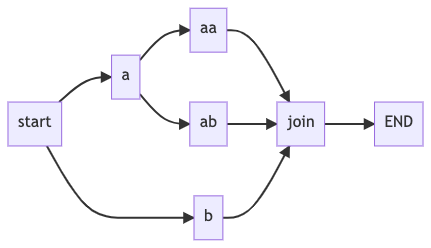
check_static_transitions: non-end steps must callself.nextat tail.check_valid_transitions: steps must have validself.nextcalls (linear, fan-out, foreach, switch).check_unknown_transitions: transitions must be within the steps defined in the graph.check_for_acyclicity: DAG must not contain cycles.check_for_orphans: all steps must be reachable fromstart.check_split_join_balance:- All fan-out steps must be joined before
endis reached. - Any
joinstep’s parents must all have the same fan-out step. The following graphs are illegal:
- All fan-out steps must be joined before
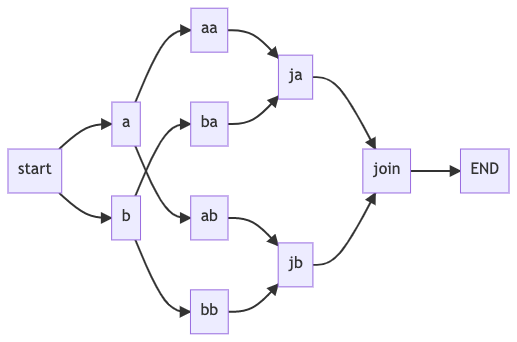
check_switch_splits: validates conditional (split-switch) splits have at least 2 transitions, a condition variable, and properly defined cases (new in recent versions).check_empty_foreaches: there must be at least one step between aforeachfan-out step and ajoinstep.check_parallel_step_after_next: child steps of aparallelfan-out step must have the@paralleldecorator.check_join_followed_by_parallel_step: a step with@paralleldecorator must be followed by ajoinstep.check_parallel_foreach_calls_parallel_step: a step with@paralleldecorator must be called withnum_parallelfrom an appropriate parent.check_nested_foreach: nestedforeachfan-outs are not allowed.check_ambiguous_joins: prevents conditional (split-switch) paths from leading directly to join steps, which could create ambiguous fan-in semantics.
Closing Thoughts
It is a pleasure to open the hood of Metaflow. A few observations:
- A
joinstep is determined by having more than one argument (inDAGNode._parsemethod) besidesself, not by the number of parent steps it has. For example, if a step has multiple parent steps, but onlyselfas an argument, then it is NOT ajoin. - The constraint that a
joinstep’s parents must all have the same fan-out step exists because it simplifies synchronization of execution and data flow. The runtime needs to know exactly which fan-out a join is closing so it can correctly gather all parallel results. - Since the original version of this article (based on Metaflow 2.4.7), the codebase has evolved significantly:
- The
FlowSpecMetametaclass now handles graph construction at class definition time, enabling flow inheritance and config-based decorators. _create_nodesno longer uses module-level AST parsing withStepVisitor; instead, it inspects each step function individually viainspect.getsourcelines.- The old
split-andandsplit-ortypes have been replaced bysplitandsplit-switchrespectively, withsplit-switchsupporting dictionary-based conditional routing and even recursive step patterns. - A dedicated
starttype was added (previously just treated aslinear). - Three new lint checks were added:
check_switch_splits,check_join_followed_by_parallel_step, andcheck_ambiguous_joins.
- The
That would be all for this post! Hopefully you have enjoyed reading. In next post, I will discuss the details of workflow execution.